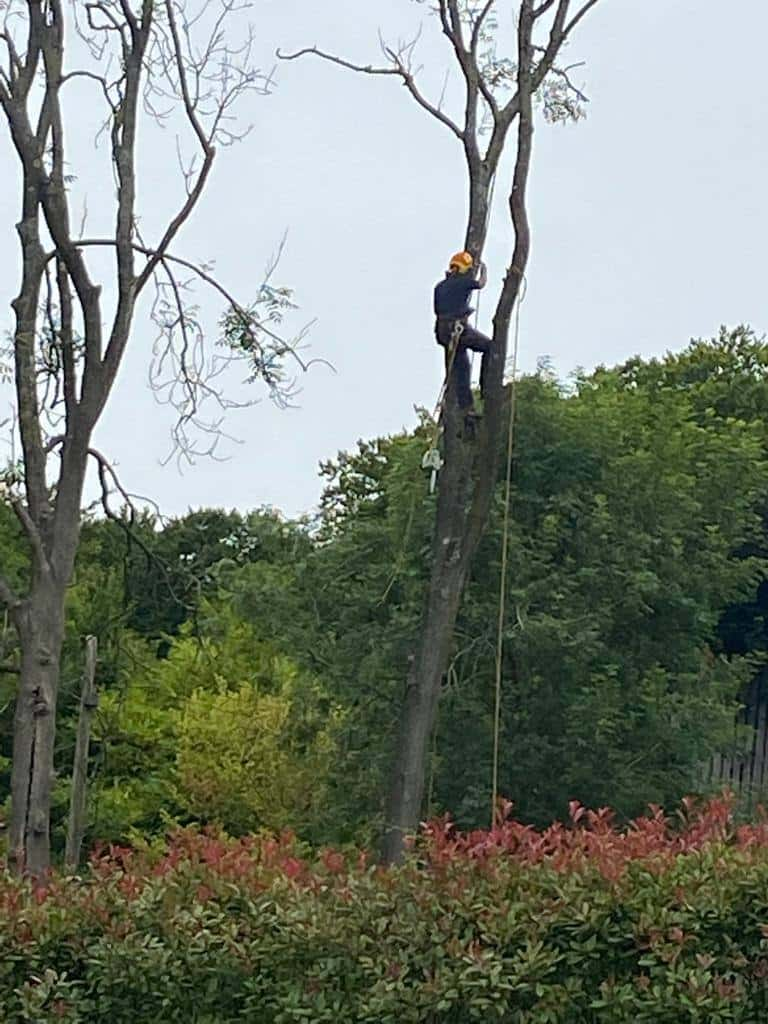
Trees add beauty, structure, and value to a property, but when their canopies become excessively dense, they can also create challenges. Overdense trees may block light, restrict air circulation, and become more vulnerable to storm damage. For homeowners in Thetford, crown thinning is a precise and effective technique that helps restore balance and health without altering the natural shape or overall height of the tree.
Understanding when crown thinning is the right approach can help you maintain a safe, attractive, and well-managed outdoor space.
What Is Crown Thinning?
Crown thinning is a tree surgery technique that removes selected branches from within the canopy rather than reducing the tree’s height or spread. The aim is to allow more light and air to pass through the crown while preserving the tree’s natural structure.
Only specific branches are removed — typically smaller, weaker, or crossing limbs — to create a more balanced internal framework.
When Trees Become Overdense
A tree becomes overdense when its canopy grows too thick, preventing light from filtering through and limiting airflow. This can occur naturally as trees mature or develop in sheltered locations. In Thetford’s varied landscapes, some species are more prone to dense crown formation, and regular maintenance becomes essential to prevent long-term issues.
An overdense crown can lead to:
- Heavy shading of gardens and surrounding plants
- Poor air circulation within the canopy
- Increased risk of branch failure in windy conditions
- Higher moisture retention that encourages disease
Crown thinning helps alleviate all of these problems.
Improved Light Penetration
One of the most noticeable benefits of crown thinning is improved light distribution. Removing overcrowded branches allows sunlight to reach lower branches, garden areas, lawns, and nearby plants. This is especially valuable for homeowners who find their gardens overshadowed by mature trees.
Better light penetration supports healthier growth both inside the tree and throughout the surrounding landscape.
Enhanced Airflow Reduces Disease Risk
Dense canopies trap moisture, creating conditions where fungi and other diseases can thrive. By opening up the crown, air is able to circulate more freely, helping the tree stay dry and reducing the likelihood of problems such as mould, mildew, and canker.
Healthier airflow also improves the overall vitality of the tree, supporting long-term stability.
Reduced Wind Resistance
Trees with thick, compact canopies are more likely to suffer damage during storms. Wind cannot pass through a dense crown easily, causing branches to sway heavily or even snap. Crown thinning allows wind to move through the tree more naturally, reducing stress on branches and lowering the risk of storm-related failures.
In an area like Thetford, where trees often experience strong winds across open landscapes, this improved wind tolerance is particularly beneficial.
Maintaining Natural Shape and Appearance
Unlike crown reduction — which decreases height or spread — crown thinning preserves the tree’s overall shape. This makes it ideal for trees that are healthy and well-positioned but simply too dense.
The result is a lighter, healthier canopy that looks natural rather than over-pruned. This subtlety is one of the reasons crown thinning is a preferred method among professional arborists.
Supporting Long-Term Tree Health
By removing weaker, overcrowded, or poorly formed branches, crown thinning encourages stronger growth throughout the canopy. Resources such as nutrients and light are distributed more evenly, helping the tree develop a healthier structure and reducing the likelihood of future branch failures.
Regular thinning, performed at appropriate intervals, helps maintain the long-term stability and health of the tree.
When Crown Thinning Is the Right Choice
Crown thinning is particularly suitable when:
- The tree is creating too much shade
- The canopy is overly compact or holding moisture
- Wind resistance needs to be reduced
- The tree is healthy but structurally crowded
- You want to preserve the tree’s natural shape
A professional assessment is always recommended to ensure thinning is carried out correctly and safely.
Conclusion
Crown thinning is an effective solution for managing overdense trees, improving light penetration, enhancing airflow, and reducing storm-related risks while preserving the tree’s natural appearance. When done professionally, it supports long-term tree health and creates a safer, more balanced outdoor environment.
If you are in Thetford and believe one of your trees may benefit from crown thinning, Thetford Tree Surgeons can provide expert advice and a tailored service. Contact us to arrange an assessment and ensure your trees remain healthy, stable, and well maintained.
Call us on: 01842 771 096
Click here to find out more about Thetford Tree Surgeons
Click here to complete our contact form and see how we can help with your tree needs.